

What I'm Reading & The Ever-Growing TBR
My TBR never seems to get any shorter—in fact, it usually grows faster than I can read. This collection includes the books I'm currently working through and the many more waiting patiently on my bookshelf. I've included brief summaries and what drew me to each one in the hopes that you may find a new addition to your own reading list.
📖 What I'm Reading 📖
The Confidante by Christopher C. Gorham

Summary: The Confidante tells the story of Anna Marie Rosenberg, a Hungarian Jewish immigrant who became one of President Freanklin D. Roosevelt's most trusted advisors. Despite playing a significant role in shaping major policies during World War II, the New Deal, and the Cold War, her contributions have largely been forgotten. This book explores her rise to influence and the challenges she faced as a woman in government and public service.
Current thoughts: I love Gorham's storytelling, making this biography feel personal and dynamic rather than a simple chronological list of events. So far, I think he's done an excellent job of highlighting the significant adversity Rosenberg faced, without overshadowing her talent and hard work. Rosenberg's remarkable ability to form relationships and achieve her goals really shines through, and I'm surprised I'd never heard of her until I read this book.
Buy on Amazon here. Also available at Barnes & Noble.
Empire of the Summer Moon by S. C. Gwynne

Summary: This book examines the rise and fall of the Comanche Nation and its impact on the history of the American West. Focusing on the conflict between the Comanches and expanding American settlement, the book also follows the life of Quanah Parker, the son of a Comanche chief and a white captive who became one of the most influential Native American leaders of his era. Through these stories, Gwynne explores the cultural clashes, violence, and transformations that shaped the nineteenth-century frontier.
Current thoughts: I've found it to be a fascinating and detailed look at a period and aspect of American history that is often overlooked. Empire of the Summer Moon offers multiple perspectives on westward expansion and provides insight into the lives, traditions, and challenges of the Comanche people.
A note on the book: While Empire of the Summer Moon has been praised for bringing attention to Comanche history and the life of Quanah Parker, some historians and Indigenous scholars have criticized aspects of the book. Critics argue that it pertuates colonial stereotypes and heavily relies on ethnocentric, white-settler accounts while omitting the Comanche perspective. Because of these concerns, I would recommend pairing the book with works by Native authors and historians to gain a broader understanding of the history and cultures it discusses, like The Comanche Empire by Pekka Hämäläinen or The Comanches: A History, 1706-1875 by Thomas W. Kavanagh, which have been approved by the Comanche Nation.
Buy on Amazon here. Also available at Barnes & Noble.
The Sun Won't Come Out Tomorrow by Kristen Martin

Summary: The Sun Won't Come Out Tomorrow explores the history of orphanhood in the United States, examining how children without parental support were treated by institutions, governments, and society. Part memoir, part research, and part cultural analysis, Martin traces the evolution of orphanages, foster care systems, and child welfare policies while highlighting the experiences of children who were often overlooked or marginalized. This book sheds light on the challenges faced by vulnerable children and the lasting impact of these systems on American society.
Current thoughts: It's an eye-opening look at a part of American society and history that is often overlooked, but affects hundreds of thousands of children in the US. The book also looks at how popular media portrays orphanhood, from titular characters like Annie to the Boxcar Children, which I find interesting; it's almost a circular effect in how media affects policy and how policy affects media. I also got to meet the author when the book was first released in 2025; hearing her research process and going through different archives also created a lot of respect for the work she put into this book.
Buy on Amazon here. Also available at Barnes & Noble.
Kent State by Brian VanDeMark
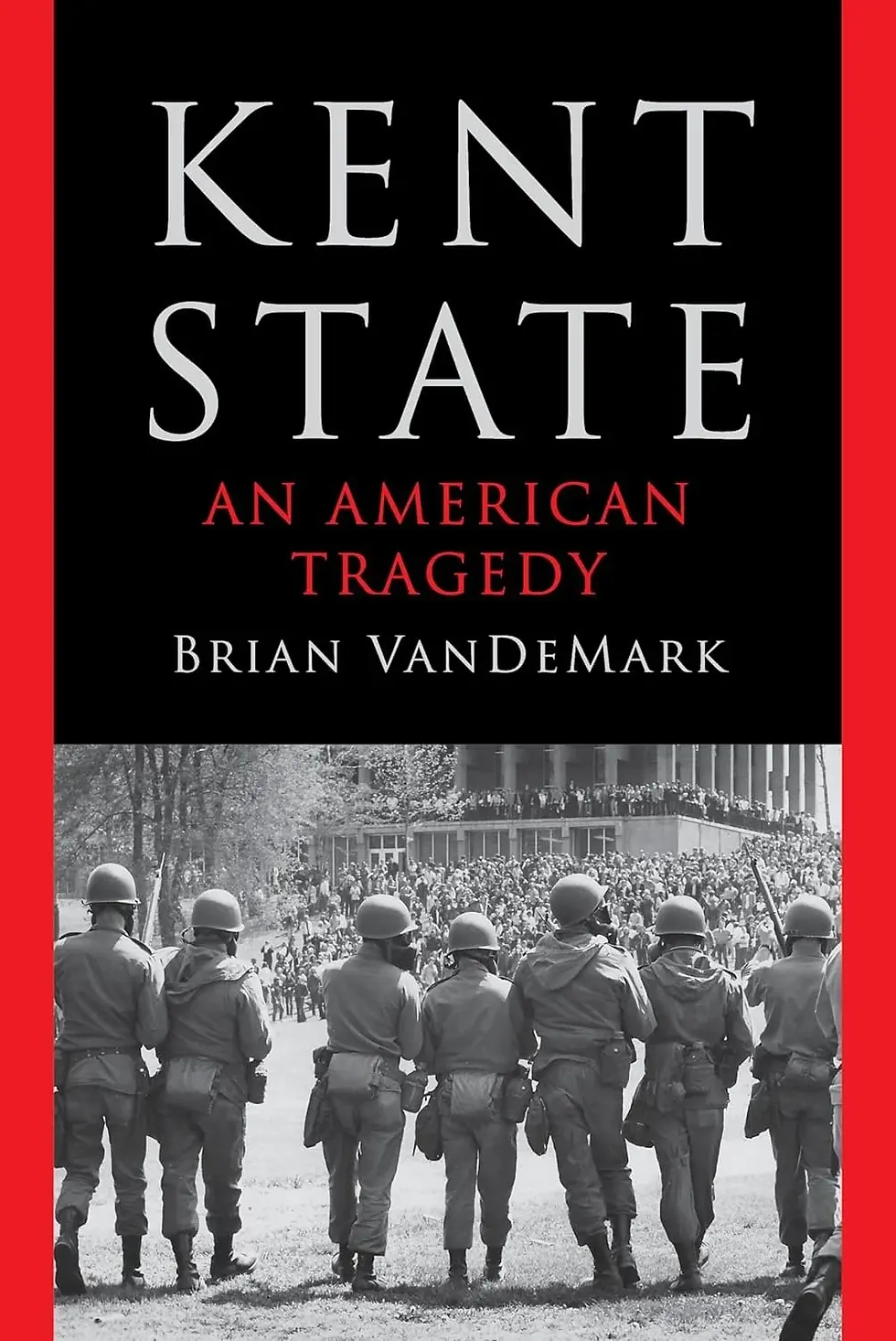
Summary: This book recounts the events surrounding the 1970 shootings at Kent State University, where members of the Ohio National Guard opened fire on students protesting the Vietnam War, killing four and wonding nine others. Drawing on interviews, archival sources, and historical record, Brian VanDeMark explores the tensions of the era, the protests on campus, the decisions that led to the shooting, and its lasting impact on American politics, activism, and public trust.
Current thoughts: I've found this book to be an extremely compelling and comprehensive account of a pivotal moment in American history. VanDeMark does an excellent job of placing the tragedy within the broader context of political division, social unrest, and the Vietnam War, helping explain why the events at Kent State resonated so deeply across the country. I also think it's an extremely timely read, given the relatively recent conflict between student protesters, academic institutions, and the federal government.
Buy on Amazon here. Also available at Barnes & Noble.
📚 Ever-Growing TBR 📚
To make this ever-growing list easier to browse, I've organized the books in alphabetical order, by title: A-H I-Q R-Z
A-H
101 Things I Learned in Law School by Vibeke Norgaard Martin

Summary: This concise guide introduces readers to many of the foundational concepts taught in law school, from legal reasoning and case analysis to courtroom procedure and constitutional principles. Presented through short explanations, diagrams, and illustrations, 101 Things I Learned in Law School offers an accessible overview of how lawyers think, argue, and interpret the law, serving as a broad introduction to the legal profession and the skills developed through legal education.
Why it's on my TBR: As someone interested in pursuing a pre-law track, I'm interested in learning more about how legal systems work and how lawyers approach complex problems; this book seems like an approachable way to gain insight into legal thinking before studying law more formally.
Buy on Amazon here. Also available at Barnes & Noble.
A Different Kind of Power by Jacinda Ardern

Summary: In this memoir, Jacinda Ardern reflects on her journey from a small-town upbringing in New Zealand to becoming one of the world's most recognizable political leaders. The book explores her experiences in government, including leading the country through major challenges such as the Christchurch mosque attacks, the COVID-19 pandemic, and periods of political division. Throughout the memoir, Ardern argues that empathy, kindness, and collaboration can be strengths rather than weaknesses in leadership.
Why it's on my TBR: I think it's important to learn from other governments, whether it's their strengths or weaknesses. Ardern's policies evidently worked, as New Zealand came out of the pandemic with one of the lowest mortality rates; I'm interested in learning more about her approach to leadership and how she navigated these challenges. The memoir also offers a valuable perspective from one of the few women at the head of their governments and countries.
Buy it on Amazon here. Also available at Barnes & Noble.
all about love by bell hooks

Summary: In this influential work, bell hooks examines how love is understood and practiced in modern society. drawing on personal experiences, philosophy, psychology, and social criticism, she argues that many people confuse love with affection, desire, or control, leading to unhealthy relationships and emotional disconnection. hooks presents love as an active choice rooted in care, trust, respect, responsibility, and honesty, and explores how a deeper understanding of love can transform families, friendships, communities, and society as a whole.
Why it's on my TBR: I'm interested in how hooks connects personal relationships to larger social and cultural issues. I think she can offer a thoughtful perspective on what love, a sought-after but rarely examined emotion, means beyond romance and how it shapes the way people interact with one another and build communities.
Buy on Amazon here. Also available at Barnes & Noble.
All The World Can Hold by Jung Yun

Summary: Set aboard a cruise ship departing just days after September 11, 2001, this novel follows three strangers whose lives intersect during a time of national uncertainty and grief. Among them are Franny, a Korean American lawyer hosting a family celebration; Doug, a former television actor confronting the mistakes of his past; and Lucy, a Black graduate student questioning the future she has planned for herself. As the voyage unfolds, each must grapple with regret, identity, family expectations, and the challenge of moving forward in a world that has been profoundly changed.
Why it's on my TBR: As I’ve built my reading list, especially in fiction, I’ve made a conscious effort to seek out more books by Asian and Asian American authors. I’m interested in how different writers explore questions of identity, culture, and human connection, and All the World Can Hold seems to do so against the backdrop of a significant moment in American history. I’m looking forward to seeing how Jung Yun weaves together personal stories with larger historical events.
Buy on Amazon here. Also available at Barnes & Noble.
Asian Americans In An Anti-Black World by Claire Jean Kim

Summary: Claire Jean Kim examines the complex relationship between Asian Americans and anti-Blackness in the United States. Drawing on history, politics, and sociology, she explores how Asian Americans have been positioned within America’s racial hierarchy and how ideas about race have shaped interactions among different communities. Kim argues that understanding anti-Blackness is essential to understanding the experiences of Asian Americans and to building more meaningful forms of racial solidarity and social justice.
Why it’s on my TBR: Having read some of Kim’s shorter works, including her earlier theory of racial triangulation, during my research on the obstacles imposed by society to keep two of the largest minority groups from forming an alliance, I’m interested in diving deeper into her work. Asian Americans in an Anti-Black World seems like a thought-provoking exploration of history, inequality, and community relationships.
Buy on Amazon here. Also available at Barnes & Noble.
Asian American Is Not A Color by Oiyan A. Poon

Summary: In Asian American Is Not A Color, OiYan A. Poon challenges common assumptions about Asian American identity and its role in conversations about race and education. Through personal stories, interviews, and research, she examines issues such as affirmative action, the model minority myth, and anti-Blackness, arguing that Asian Americans are often treated as a monolithic group despite their diverse experiences. Poon explores how race shapes educational opportunities and advocates for a more nuanced understanding of Asian American identity and racial justice.
Why it's on my TBR: As a soon-to-be college student, who’s currently undergoing college applications, I think this is an extremely timely read for me personally, but also extremely eye-opening with respect to recent debates about affirmative action and DEI. I also think it’s important to refrain from restricting a diverse group to only one identity, so I’m excited to read this one.
Buy on Amazon here. Also available at Barnes & Noble.
Both/And by Huma Abedin

Summary: In her memoir, Huma Abedin reflects on her life as the daughter of Muslim immigrants, her years working in American politics, and her experiences balancing multiple identities and cultures. She recounts her upbringing between the United States and Saudi Arabia, her long career alongside Hillary Rodham Clinton, and the personal challenges she faced in the public eye. Throughout the book, Abedin explores themes of belonging, faith, resilience, and the idea that people can embrace seemingly different parts of themselves at the same time—the “both/and” of the title.
Why it's on my TBR: As someone who navigates multiple identities and cultural influences, I’m interested in Abedin’s reflections on balancing different parts of herself without feeling forced to choose one over another. I’m also considering a future in law and public service, so I’m curious to learn from her experiences working in politics and handling the pressures that come with being in the public eye. Both/And seems like it offers both a personal story about belonging and a broader perspective on leadership, resilience, and finding your place in different worlds.
Buy on Amazon here. Also available at Barnes & Noble.
Caste by Isabel Wilkerson

Summary: Isabel Wilkerson argues that the many forms of inequality in the United States can be better understood through the concept of caste—a social hierarchy that assigns status and power based on inherited characteristics. Drawing comparisons between the United States, India, and Nazi Germany, she examines how caste systems are created, maintained, and reinforced over time. Through historical analysis, personal narratives, and social commentary, Wilkerson explores how these hierarchies shape people’s opportunities, relationships, and experiences.
Why it's on my TBR: I’m interested in understanding how societies create and maintain divisions among groups of people, especially through systems that often seem natural or invisible to those living within them. As someone drawn to cultural anthropology and the study of social structures, I’m curious about Wilkerson’s argument that caste can provide a different framework for understanding race, inequality, and power in the United States.
Buy on Amazon here. Also available at Barnes & Noble.
Chain Of Ideas by Ibram X. Kendi

Summary: In Chain of Ideas, Kendi examines the rise of the “great replacement theory,” a conspiracy theory that claims demographic change threatens the power and status of majority groups. Tracing its origins and global spread, he argues that this idea has influenced political movements and leaders around the world, contributing to growing authoritarianism and social division. Drawing on history, politics, and contemporary events, Kendi explores how fears about race, immigration, and identity have shaped public discourse and democratic institutions.
Why it's on my TBR: With debates about immigration, national identity, and belonging playing such a visible role in politics both in the United States and around the world, I’ve become increasingly interested in understanding why certain ideas gain traction, and this book feels especially timely. I’m curious about how narratives and beliefs can influence public opinion, political movements, and even policy, and I hope this book can help me answer some of these questions.
Buy on Amazon here. Also available at Barnes & Noble.
Discourses of Race and Rising China by Yinghong Cheng

Summary: In Discourses of Race and Rising China, Yinghong Cheng examines how ideas about race have developed and been debated in modern China. Drawing on history, politics, media, and popular culture, Cheng explores how Chinese intellectuals, policymakers, and the public have understood race, ethnicity, and national identity in the context of China’s growing global influence. The book analyzes how discussions of race intersect with issues such as nationalism, globalization, immigration, and China’s relationships with other countries and peoples.
Why it's on my TBR: I’m curious about how conversations about race have evolved outside of a Western context; much of the literature I encounter focuses on race in the US, so I’m interested in learning how these ideas are understood and debated in China, especially since the country and its culture has an equal impact on my identity. Additionally, China’s global influence continues to grow, and the relationship between the US and China continues to be debated, making this book an opportunity to understand how history, politics, and culture shape different understandings of race and belonging around the world.
Buy on Amazon here. Also available at Barnes & Noble.
Dispatches from the Race War by Tim Wise

Summary: This collection of essays examines race, inequality, and political conflict in the United States during the Obama and Trump eras. Using events such as the election of Barack Obama, the killing of Trayvon Martin, the rise of the Tea Party, Black Lives Matter protests, and debates over immigration and policing, Wise argues that racism remains deeply embedded in American institutions and public life. Through historical analysis and commentary on current events, he challenges ideas of a “post-racial” America and explores how race continues to shape politics, power, and social relations.
Why it's on my TBR: I’m curious about how Wise connects historical patterns of inequality to contemporary debates about identity, citizenship, and power, especially given my interest in social justice. The book also seems relevant to many of the conversations about race and politics that continue to shape public discourse today.
A note on perspective: Wise is a prominent anti-racism activist and writes from a clear advocacy-oriented viewpoint. As such, it’s encouraged to also read works from other scholars and perspectives when exploring complex issues of race and politics.
Buy on Amazon here. Also available at Barnes & Noble.
Eloquent Rage by Brittney Cooper

Summary: In Eloquent Rage, Brittney Cooper combines personal stories, cultural criticism, and Black feminist thought to examine race, gender, politics, and identity in the United States. Challenging stereotypes such as the “angry Black woman,” she argues that anger can be a legitimate and powerful response to injustice when channeled productively. Throughout the book, Cooper explores topics including feminism, friendship, education, respectability politics, relationships, and social inequality, while candidly reflecting on her own experiences as a Black woman navigating these issues.
Why it's on my TBR: Dr. Brittney Cooper is currently a professor at Rutgers’ University, within the Women’s, Gender, and Sexuality Studies Department. I had the opportunity to hear her speak during the award ceremony for trailblazers in women’s achievements and gender justice. She was an excellent speaker, and I became more interested in feminism through both the event and her speech, and I’m super excited to read what seems like a thought-provoking perspective on not just feminism, but Black feminism.
Buy on Amazon here. Also available at Barnes & Noble.
Feeding Ghosts by Tessa Hulls

Summary: This graphic memoir traces three generations of women in Tessa Hulls’s family, exploring how war, displacement, migration, and trauma shaped their lives. Moving between China, Hong Kong, and the United States, Hulls investigates her grandmother’s experiences during the Chinese Civil War and Cultural Revolution, her mother’s struggles with the lasting effects of family trauma, and her own efforts to understand her family’s history. Through illustrations and storytelling, Feeding Ghosts examines memory, identity, the idea of inheritance, and the ways historical events can reverberate across generations.
Why it's on my TBR: Technically, I’ve already finished this book. However, I’ve put it in my TBR list here because I think it’s a valuable book offering perspective on an often-generalized event in world history, particularly when it’s examined with a Western lens. It’s also a highly relatable read as someone whose family has lived through the same events, albeit not as dramatically or to the extent Tessa Hulls’ family went through. Overall, I think this book offers valuable insight into generational trauma, major historical events, and the importance of connection.
Buy on Amazon here. Also available at Barnes & Noble.
Fleshing Out Skull & Bones by Kris Millegan, et al.

Summary: This curated collection investigates the history, influence, and controversies surrounding the secret society Skull and Bones, founded at Yale University. Bringing together essays, historical documents, articles, photographs, and commentary from multiple contributors, the book examines claims about the society’s connections to political, financial, and social elites in the United States. It explores the role of Skull and Bones members in government, business, and foreign policy while also discussing broader themes of secrecy, power, elite networks, and influence in American society.
Why it's on my TBR: I’d never heard of a secret society like Skull and Bones before—it seemed like the stuff of fantasy and dystopian novels. Knowing they actually exist now, I’m interested in the role elite networks play in influencing public life behind the scenes. While I know this book approaches its subject from a controversial perspective and includes claims that are debated by historians, I’m interested in reading it as part of a broader goal of understanding how power, privilege, and access operate within political and social institutions.
A note on the book: Fleshing Out Skull & Bones is not a conventional academic history and contains essays that range from documented historical research to more speculative and controversial claims. On that note, this book should be approached as one perspective on Skull and Bones rather than a definitive account, and it may be helpful to read other works on elite institutions and American political history alongside it.
Buy on Amazon here. Also available at Barnes & Noble.
Generations by Jean M. Twenge

Summary: Jean Twenge examines the six generations currently living in the United States and explores how their experiences, values, and behaviors differ. Drawing on decades of survey data, she argues that technological change—more than major historical events—is a key force shaping generational attitudes toward topics such as politics, race, gender, work, relationships, and mental health. By comparing generations from the Silent Generation to Gen Z, Twenge investigates how social and technological shifts have influenced American society and what those changes may mean for the future.
Why it's on my TBR: As a part of Gen Z, I’m interested in understanding how my generation compares with those that came before it and how technology has influenced the way people think, communicate, and engage with society. I’m especially interested in the role generational differences may play in explaining broader shifts in attitudes toward different sociopolitical issues. Twenge’s arguments about the impact of technology are also very timely, as the consequences of technology continue to be discussed today.
Buy on Amazon here. Also available at Barnes & Noble.
How Fascism Works by Jason Stanley

Summary: In How Fascism Works, Jason Stanley examines the tactics and rhetoric commonly used by fascist movements, both historically and in the present day. Referencing examples from countries such as Germany, Hungary, India, Myanmar, and the US, he argues that fascism often relies on creating divisions between an idealized “us” and a threatening “them.” Stanley explores themes such as propaganda, nationalism, victimhood, anti-intellectualism, law and order, and the manipulation of history, showing how these ideas can weaken democratic institutions and reshape public discourse.
Why it's on my TBR: I think the themes explored in this book are very timely, with political polarization becoming increasingly extreme and current attacks on education and academic institutions. I think it’s important to be able to recognize when current events are reflecting a history we don’t want to repeat, and be able to implement preventative measures in order to ensure we preserve the current peace/democratic environment; I think How Fascism Works is an essential read for this current moment, and I hope it will help explain the psychology behind fascism and its influence.
Buy on Amazon here. Also available at Barnes & Noble.
I-Q
Immigration Realities by Ernesto Castañeda, Carina Cione

Summary: In Immigration Realities, Ernesto Castañeda and Carina Cione examine common myths and misconceptions about immigration, particularly in the United States. Drawing on sociological research, policy analysis, and global comparisons, they explore questions like who immigrants are, why they migrate, how they impact economies, and how immigration systems actually function. Castañeda and Cione challenge popular narratives that portray immigration as a crisis, arguing instead that migration is a complex and longstanding global process shaped by political, economic, and social forces. Immigration Realities also explores the role media and political rhetoric play in distorting public understanding of immigration.
Why it's on my TBR: I’m currently undergoing an internship with a local immigration lawyer, and this book seems like a really great way to understand more about the immigration system in general, as well as common misconceptions and how those misconceptions are formed. It also feels especially relevant to current political conversations about borders, immigration control, and identity, both in the US and internationally.
Buy on Amazon here. Also available at Barnes & Noble.
Indigenous Continent by Pekka Hämaäläinen

Summary: This history reexamines North American history from an Indigenous perspective. Rather than portraying Native peoples as passive observers of European colonization, Pekka Hämäläinen argues that Indigenous nations remained powerful political, military, and economic forces for centuries after European arrival. The book traces the interactions among Indigenous nations, European empires, and the US, showing how Native communities shaped the continent’s development and resisted efforts to dispossess them. By centering Indigenous agency, Indigenous Continent challenges traditional narratives of American history and offers a broader view of how North America was formed.
Why it's on my TBR: I’m interested in histories that challenge familiar narratives and highlight perspectives that are often overlooked. Given this interest, I’m curious about how Hämäläinen challenges and reframes the “accepted” North American history by placing Indigenous nations at its center. Indigenous Continent seems like an opportunity to better understand the complexity of cultural interactions, power, and resistance throughout both the continent’s and America’s history.
A note on the book: While Indigenous Continent has been widely praised for centering Indigenous agency and challenging Eurocentric accounts of North American history, some historians have questioned Hämäläinen’s interpretation, as the book can sometimes emphasize large-scale Indigenous power structures at the expense of local diversity and may occasionally overstate Indigenous political cohesion. Others view these reinterpretations as a valuable corrective to older histories that minimized Indigenous influence. As with many historical works, Indigenous Continent has sparked debate about how best to understand the balance and shift of power, resistance, and change in North American history.
Buy on Amazon here. Also available at Barnes & Noble.
Mafia by Ryan Gingeras

Summary: This book traces the history of organized crime from its origins in nineteenth-century Sicily to its spread across the world. Rather than focusing solely on the Italian Mafia, Ryan Gingeras examines a wide range of criminal organizations and explores how groups commonly labeled as “mafias” emerged in different political, economic, and cultural contexts. Mafia investigates the relationships between organized crime, governments, business, migration, and globalization, arguing that mafias have often adapted to changing social conditions rather than existing outside of them.
Why it's on my TBR: I’ve watched a lot of different docuseries about famous mob figures and organized crime in places like NYC and Philadelphia, which sparked an interest in how these organizations have developed and how they maintain influence for so long. I want to learn more about the history behind the stories I’ve encountered and see how organized crime fits into broader social, political, and economic systems globally.
Buy on Amazon here. Also available at Barnes & Noble.
Missoula by Jon Krakauer

Summary: In this exposé, Jon Krakauer examines a series of sexual assault cases in Missoula, Montana, and the responses of law enforcement, prosecutors, universities, and the justice system. Through interviews, court records, and extensive reporting, he follows the experiences of several survivors as they navigate legal and institutional processes after reporting assaults. Missoula explores broader issues surrounding consent, victim-blaming, campus culture, and the challenges of prosecuting sexual violence, using Missoula as a case study to examine an issue that extends far beyond a single community.
Why it's on my TBR: As a young adult who will be heading to college in the next few years, I’m interested in learning more about issues that can directly affect students and campus communities. The book’s focus on how institutions respond to allegations of sexual assault eels especially relevant as I think about college life and the responsibilities universities have to keep students safe. I’m also curious about the legal and ethical challenges involved in investigating these cases and balancing the rights of everyone involved. I’m hoping the book will help me better understand a topic that is both personally relevant and important to broader conversations about accountability and justice.
Buy on Amazon here. Also available at Barnes & Noble.
Motherless Brooklyn by Jonathan Lethem

Summary: This mystery novel follows Lionel Essrog, a private detective with Tourette syndrome who works for a small detective agency in Brooklyn. After his mentor and father figure is murdered, Lionel sets out to uncover the truth behind the killing. As he investigates, he becomes entangled in a web of crime, corruption, and hidden relationships throughout New York City. Blending elements of detective fiction with literary storytelling, Motherless Brooklyn explores themes of identity, belonging, loyalty, and the challenges Lionel faces as he navigates both the case and his own mind.
Why it's on my TBR: I’ve always loved mystery novels, especially ever since my friend introduced me to Agatha Christie and the world of Hercule Poirot. I’m super excited to see how Motherless Brooklyn approaches the detective genre, especially given Lionel’s unique perspective and voice, as well as the New York setting—admittedly different from the classic British world of Poirot. I also love when mysteries are about understanding people and their motivations, rather than simply solving a crime; this novel seems to offer a perfect blend of a compelling investigation combined with deeper questions about identity and human relationships.
Buy on Amazon here. Also available at Barnes & Noble.
Persepolis, Volumes I and II by Marjane Satrapi

Summary: This graphic memoir chronicles Marjane Satrapi’s childhood and early adulthood during and after the Iranian Revolution. Through black-and-white illustrations and personal storytelling, Satrapi recounts growing up in Iran amid political upheaval, war, and social restrictions before later moving to Europe. Her memoir explores her experiences navigating questions of identity, culture, family, religion, and belonging while witnessing the effects of revolution and conflict on everyday life. By blending personal memories with historical events, Persepolis offers an intimate perspective on modern Iranian history and the challenges of growing up between different cultures.
Why it's on my TBR: Middle Eastern history is something I know very little about, despite the history classes I’ve taken and the constant interactions between the US and the Middle East. I want to remedy that, and I think hearing a personal story/experience set against the backdrop of a major historical event helps make the history more personal, rather than a distant timeline. Given the role the US has played in the many armed conflicts in the Middle East, as well as ongoing conflicts between different governments, I think it’s essential that we hear stories from people who have truly experienced the impact of this kind of influence from an outside global power.
Buy on Amazon here. Also available at Barnes & Noble.
R-Z
Rise by Jeff Yang, Phil Yu, and Philip Wang

Summary: Rise explores the growth of Asian American visibility and influence in popular culture from the 90s to the present. Through a variety of essays, interviews, and cultural commentary, the authors examine milestones in film, television, music, literature, sports, and activism while highlighting the individuals and movements that challenged stereotyped and expanded representation. Rise also discusses the obstacles Asian Americans have faced in media and public life, showing how questions of identity, belonging, and representation continue to shape contemporary culture.
Why it's on my TBR: Having grown up during a period when Asian culture has become increasingly mainstream, I’m interested in learning more about the history behind those changes and the people who helped make the shift possible. Rise seems like an engaging way to explore the intersection of media, culture, and social change through a perspective that connects with many of my own interests and experiences.
Buy on Amazon here. Also available at Barnes & Noble.
Sister Outsider by Audre Lorde

Summary: This influential collection brings together Audre Lorde’s essays and speeches on race, gender, sexuality, identity, and social justice. Writing from her perspective as a Black lesbian feminist, Lorde examines how systems of oppression intersect and argues that differences among people should be recognized and understood rather than ignored. Through discussions of feminism, activism, education, and power, she challenges readers to confront inequality and consider how personal experiences connect to broader social and political structures.
Why it's on my TBR: At the same event where I heard Dr. Brittney Cooper speak, I got to read one of Audre Lorde’s essays (featured in this collection), “The Master’s Tools Will Never Dismantle the Master’s House,” which argues that true systemic change cannot be achieved by using the same frameworks that created inequality. This introduction to her work led me to add this collection to my TBR, as I think she offers a valuable and distinct perspective on social justice and the different methods of achieving equality.
Buy on Amazon here. Also available at Barnes & Noble.
Something Lost, Something Gained by Hillary Rodham Clinton

Summary: In this memoir, Hillary Clinton reflects on her experiences in public service, politics, family life, and advocacy. Drawing on decades in the public eye, she discusses lessons from both successes and setbacks while reflecting on issues such as democracy, leadership, women’s rights, and civic engagement. Blending personal stories with commentary on contemporary challenges, the book explores how resilience, relationships, and public service have shaped her life and career.
Why it's on my TBR: As the first woman nominated for president by a major political party, Clinton came closer than anyone before her to breaking the highest political glass ceiling in the US, and I’m interested in learning from someone who spent decades navigating spaces where women have been historically underrepresented. Additionally, I’m curious about her transition from an influential figure during her husband’s tumultuous presidency to building her own political career. Whether people agree with her politics or not, her life offers a unique perspective on ambition, resilience, public service, and the challenges women face in positions of power.
Buy on Amazon here. Also available at Barnes & Noble.
Survivor Injustice by Kylie Cheung

Summary: In Survivor Injustice, journalist Kylie Cheung argues that domestic violence and sexual violence cannot be understood solely as private, individual problems. Instead, she examines how abuse is connected to broader social and political systems, including the legal system, reproductive rights policies, economic inequality, and the criminal justice system. Through a combination of reporting, personal reflection, and social analysis, Cheung explores how survivors often face barriers to safety, autonomy, and justice, particularly when factors such as race, gender, and economic status are involved. Survivor Injustice challenges readers to think about the relationship between interpersonal violence and larger structures of power in American society.
Why it's on my TBR: I’m interested in Cheung’s argument that issues often viewed as personal or private are deeply connected to broader systems of power and governance. This book seems like an opportunity to explore questions about justice, bodily autonomy, and the role institutions play in protecting—or failing to protect—vulnerable people.
Buy on Amazon here. Also available at Barnes & Noble.
The Anthropology Book (Part of the Big Ideas Simply Explained series)

Summary: This illustrated introduction surveys some of the most important concepts, theories, and thinkers in anthropology. Covering topics like culture, kinship, language, religion, globalization, identity, and social change, the book explains how anthropologists study human societies and what their research reveals about the ways people live and interact around the world. Combining concise explanations, timelines, and a variety of visuals, The Anthropology Book introduces key ideas from cultural, biological, linguistic, and archaeological anthropology in an accessible format.
Why it's on my TBR: As someone planning to study cultural anthropology, I want to build a stronger foundation in the field and become more familiar with its major theories and scholars. Since anthropology draws from many different perspectives and areas of research, this book seems like a useful way to explore the discipline as a whole and discover topics I’d like to study more deeply. It also seems like a good reference for connecting some of the questions that originally sparked my interest in anthropology—questions about culture, identity, human behavior, and what societies have in common despite their differences.
Buy on Amazon here. Also available at Barnes & Noble.
The Making of Asian America by Erika Lee

Summary: The Making of Asian America is a comprehensive history that traces the experiences of Asian immigrants and Asian Americans from the earliest arrivals in North America to the present day. Erika Lee examines the diverse communities that make up Asian America, including people with roots in East Asia, South Asia, Southeast Asia, and the Pacific Islands, and explores how immigration, labor, exclusion laws, war, activism, and cultural change have shaped their experiences. By combining individual stories with broader historical events, the book highlights both the challenges Asian Americans have faced and the contributions they have made to American society.
Why it's on my TBR: During a youth leadership program at AAPI New Jersey, I received the young adults’ version of The Making of Asian America, which I read multiple times. Since then, my interest in understanding more about the history of the Asian American community in the US has only grown, and I want to approach this history from a more mature and complete perspective. I’m especially interested in understanding how different Asian American communities have navigated questions of belonging, discrimination, and representation over time.
Buy on Amazon here. Also available at Barnes & Noble.
The Next American Revolution by Grace Lee Boggs
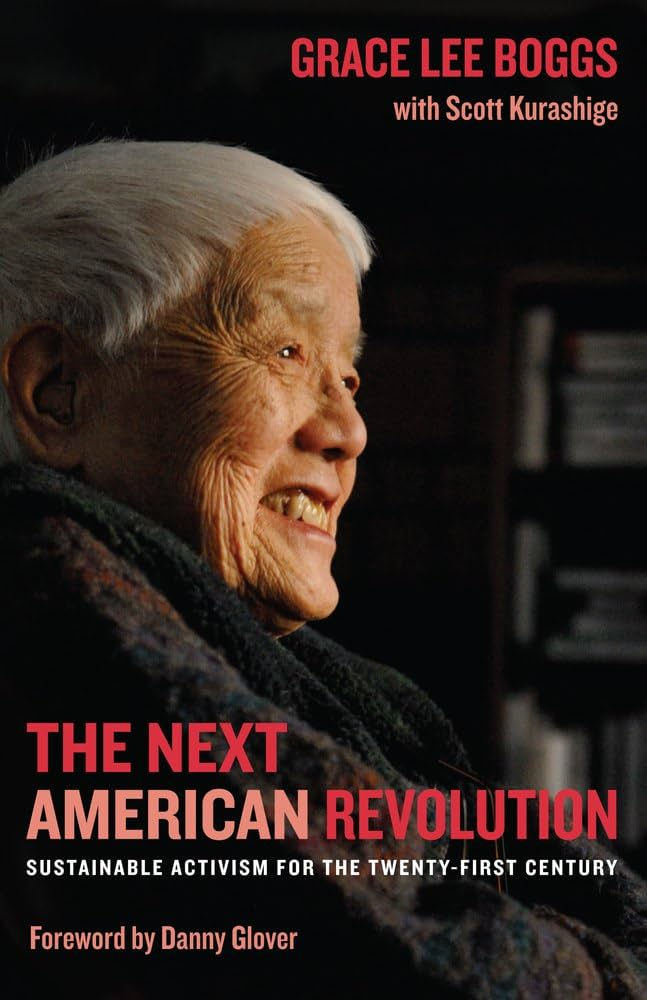
Summary: In The Next American Revolution, Grace Lee Boggs reflects on a life of activism and contends that meaningful social change begins within local communities. Drawing on her experiences in labor, civil rights, environmental, and community-based movements, she challenges traditional ideas of revolution as a sudden political upheaval. Instead, Boggs envisions a transformation driven by grassroots organizing, civic engagement, and a rethinking of how people live, work, and relate to one another. The Next American Revolution explores themes like democracy, sustainability, education, and community empowerment in the face of economic and social change.
Why it's on my TBR: I’m drawn to Grace Lee Boggs’s story as both an activist and a bridge-builder. Her work during and after the Civil Rights Movement demonstrates the power of solidarity across different communities, especially her efforts to support grassroots organizing among both African Americans and Asian Americans. I’m interested in learning how she approached coalition-building and community action, especially at a time when many of today’s conversations about race, identity, and activism were continuing to evolve. Her perspective seems especially valuable because it shows how meaningful change often comes not from a single leader, but from people working together toward a common goal.
Buy on Amazon here. Also available at Barnes & Noble.
The Psychology of Money by Morgan Housel

Summary: The Psychology of Money explores how people’s attitudes, emotions, and behaviors influence financial decisions. Through a series of short stories and lessons, Morgan Housel argues that success with money is often shaped less by technical knowledge and more by habits like patience, discipline, humility, and long-term thinking. Housel examines numerous topics, including saving, investing, risk, luck, wealth, and happiness, showing how personal experiences and psychology can affect the way people manage money and make financial choices.
Why it's on my TBR: Having taken AP Psychology this past year, and a (very) general course on financial literacy, I’m intrigued by the way Housel seems to connect these two topics. I’ve always thought of financial matters as strictly mathematical/facts-based, so I’m eager to read about the psychological side of money, which also seems relevant to understanding human behavior on a broader scale.
Buy on Amazon here. Also available at Barnes & Noble.
What Is Free Speech? by Fara Dabhoiwala

Summary: What Is Free Speech traces the history of free speech from the seventeenth century to the present, challenging the idea that freedom of expression has always been understood in the same way. Faramerz Dabhoiwala explores how debates over religion, politics, censorship, and public discourse shaped modern concepts of free speech, showing that the right to express controversial opinions emerged gradually through centuries of conflict and negotiation. What Is Free Speech also examines the tensions that continue to surround free expression, including questions about harm, tolerance, and the limits of speech in democratic societies.
Why it's on my TBR: As one of the first freedoms established in the US Bill of Rights, it seems like a no-brainer that every American knows what free speech is. Yet, recently, there have been debates over what constitutes free speech and the limits of such freedom within a democracy. As such, I’m curious about the complexities that surround this seemingly straightforward principle, as well as understanding the historical roots of these complexities and debates, and their impact on contemporary discussions about censorship, public discourse, and democratic participation.
Buy on Amazon here. Also available at Barnes & Noble.
Whoohoo! You made it through a long post! Whether or not you choose to join me on tackling my extraordinarily long TBR this summer, I hope you find a book worth your time, or a topic you'd love to explore and learn more about. Happy reading!


Comments